
WELCOME BONUS 300%
UP TO €2000 + 100
FREE SPINS
UP TO €2000 + 100
FREE SPINS
Home → Blackjack
Blackjack at Locowin Casino: Variants, Rules and Payouts
Splitting Eights vs Standing on 16
Splitting eights is a critical decision in Blackjack, with significant implications for the house edge. While some variations might offer a 3:2 payout on a natural blackjack, the decision to split eights, as opposed to standing on 16, directly impacts the player's potential return. A house edge of 0.15% is achievable with a single deck and classic rules, contrasting with higher edges found in other variants.
Standing on 16 against a dealer's ten-value card is generally a disadvantageous move, increasing the house's advantage. In contrast, splitting eights, when permissible, aims to create two potentially stronger hands. This strategy is often contrasted with playing a 16, where the player is at a higher risk of busting. The optimal strategy aims to minimize the house edge, which can be as low as 0.15% in certain single-deck games.
The choice between splitting eights and standing on 16 directly influences the overall RTP. This can lead to a higher effective RTP compared to the suboptimal decision of standing on 16. The objective is to maintain the lowest possible house advantage, ideally below 0.46%.
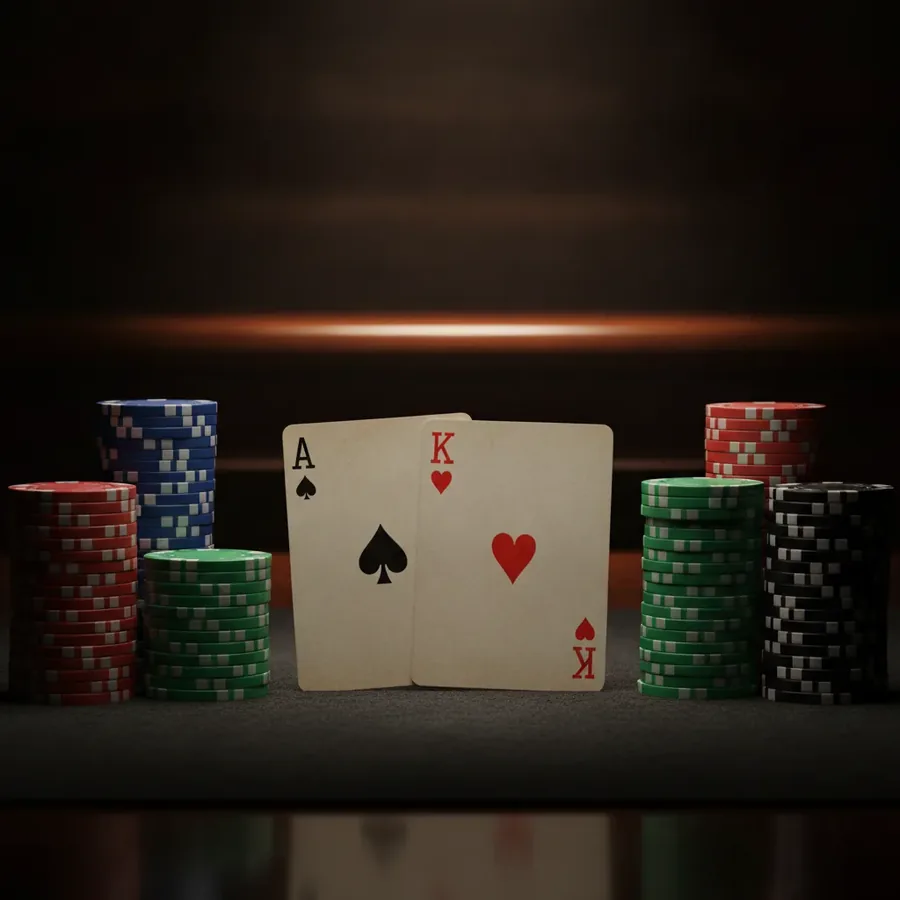
Six Card Charlie Pays Immediately with Six Cards
The "Six Card Charlie" rule offers an immediate win under specific conditions, regardless of the dealer's hand. This rule provides a payout mechanism that can bypass the usual showdown. In some blackjack variants, such as those with a 3:2 payout for a natural blackjack, this additional rule can alter the game's dynamics and player advantage.
A player achieving a six-card total of 21 or less triggers the Six Card Charlie payout. This stands in contrast to standard blackjack outcomes where the player must beat the dealer's hand. The theoretical RTP for standard blackjack games can vary, with examples showing figures like 99.54% for a six-deck game with specific rules, but the Six Card Charlie rule adds another layer.
The immediate payout for a Six Card Charlie can be a significant advantage for players, especially in games where the house edge is otherwise higher. The ultimate goal for players is to find tables that minimize the house advantage, which can be as low as 0.15% in some classic single-deck games.
No Double Down on three cards
The restriction on doubling down after receiving three cards significantly alters the player's strategic options. In many blackjack variants, such as "Blackjack Liberal Vegas Strip," doubling down is a key maneuver to capitalize on advantageous starting hands. This rule, "No Double Down on three cards," effectively removes this strategic flexibility when a player has hit three times.
This limitation can increase the house edge compared to games where doubling down is always permitted. For instance, a game with a 3:2 payout and liberal rules like "Blackjack Liberal Vegas Strip" boasts a house edge of 0.28%. The absence of a "double down on three cards" option would inevitably push this figure higher, making it less favourable for the player.
Players seeking the lowest possible house edge, such as the 0.15% offered by "Blackjack Ein Deck, klassische Regeln, 3:2," should be aware of such restrictions. The "No Double Down on three cards" rule, by limiting strategic plays, can lead to a higher average loss over time. This contrasts with games offering more flexibility, where RTP can reach 99.72%.
Step-by-step Split at the Live Table
Live blackjack tables offer a dynamic environment where strategic decisions like splitting are executed in real-time. At Evolution's "Infinite Blackjack," for example, the ability to split pairs is a fundamental part of the gameplay, allowing players to create multiple hands from a single starting hand. The RTP for Infinite Blackjack is noted at 99.47%.
The process of splitting at a live table involves specific steps, and understanding these is crucial for optimal play. Unlike some static blackjack variants where rules might be more rigid, live dealer games often accommodate multiple side bets. For instance, "Lightning Blackjack" offers an RTP of 99.56% and features lightning multipliers that can enhance payouts on winning hands.
Players engaging with live blackjack, such as Playtech's "Quantum Blackjack Plus Live" with an RTP of 99.57% (optimal strategy), should be aware of how splitting affects their game. The ability to split, combined with potential side bets and multipliers, offers a rich strategic landscape. However, it is essential to remember that side bets, like "Blackjack Insurance" with its 7.47% house edge, often carry significantly higher risks.
Bonus Lost Due to 10 Percent Contribution
The welcome bonus of 300% up to €2,000, coupled with 100 free spins, is subject to wagering requirements. A critical factor impacting the speed at which this bonus can be converted into real money is the game contribution percentage. Specifically, table games contribute only 10% towards the wagering requirement.
This 10% contribution rate means that for every €100 wagered on table games, only €10 will count towards clearing the bonus. To meet the wagering for a €2,000 bonus, a player would need to wager €20,000 in total if slots were the only game played (100% contribution). However, with table games, this turnover requirement effectively increases significantly.
A player aiming to clear the bonus solely through table games would need to wager €200,000 (€20,000 / 0.10) to meet the wagering requirements. This substantial turnover makes it highly challenging to release the bonus funds, especially when compared to slots where the 100% contribution rate makes the target much more attainable. The bonus can be effectively lost if players cannot meet these stringent conditions.
Blackjack variants at a glance
| Variant | Payout | House edge | Rule | Bet range |
|---|---|---|---|---|
| Blackjack Split / Double / H17 – Regel-Effekte | n.a. (Regel-Modifikatoren) | H17 +0.22 Prozentpunkte; RSA −0.08 Prozentpunkte; DAS −0.14 Prozentpunkte | Dealer Hits Soft 17 verschlechtert RTP um 0.22 Prozentpunkte; Resplit Aces verbessert um 0.08 Prozentpunkte; Double After Split verbessert um ca. 0.14 Prozentpunkte; 6 Decks statt 8 – ca. 0.02 Prozentpunkte. | Double – Einsatz ×2 mit einer Karte; Split – bis 4 Hände; Ass-Split meist mit einer Karte. |
| Blackjack Auszahlung 6:5 statt 3:2 (6 Decks) | 98.15% | 1.85% | Ersatz von 3:2 durch 6:5 fügt exakt +1.39 Prozentpunkte zum Vorteil des Casinos hinzu – stärker als jede andere Regeländerung. Bei $10 Einsatz zahlt Blackjack $12 statt $15. | Blackjack 6:5, Gewinn 1:1 |
| Blackjack Liberal Vegas Strip (liberale Regeln, 3:2) | 99.72% | 0.28% | Günstigste Regelkombination: S17 + DAS + Resplit + Late Surrender. Standardabweichung 1,15 | Blackjack 3:2, Gewinn 1:1 |
| Blackjack 6 Decks, S17, DAS, DOA, Auszahlung 3:2, Basisstrategie | 99.54% | 0.46% | Dealer steht auf Soft 17; Verdopplung auf jeder Zweierkarte; Verdopplung nach Split erlaubt; keine Aufgabe. Basisstrategie ist für diesen Wert zwingend | Blackjack 3:2, normaler Gewinn 1:1, Insurance 2:1 |
| Blackjack Surrender (Late Surrender) – Regel-Effekt | n.a. (Regel-Modifikator) | −0.08 Prozentpunkte | Spieler gibt Hand nach Dealer-Blackjack-Prüfung auf, verliert die Hälfte des Einsatzes. Verbessert RTP um ca. 0.08 Prozentpunkte. Early Surrender ist wesentlich wertvoller (bis −0.6 Prozentpunkte), aber extrem selten. | Rückzahlung 50% des Einsatzes |
| Blackjack Ein Deck, klassische Regeln, 3:2 | 99.85% | 0.15% | Weniger Decks = niedrigerer Vorteil; ein Deck gibt ca. −0.48 Prozentpunkte gegenüber 8 Decks. Oft durch 6:5 Auszahlung kompensiert. | Blackjack 3:2, Gewinn 1:1 |
Latency under 2 seconds at the live table
Infinite Blackjack from Evolution aims for rapid gameplay, with responses typically occurring under 2 seconds. This speed is crucial for players at the live table, where quick decisions are often necessary. The platform supports unlimited seats, allowing many players to participate simultaneously without significant delays in game progression.
This low latency is a key feature for live casino games, especially those like Infinite Blackjack that offer multiple side bets such as Any Pair, 21+3, Hot 3, and Bust It. The RTP for Infinite Blackjack is listed at 99.47%, indicating a competitive return to player for this fast-paced variant.
Such responsiveness is vital for maintaining player engagement and ensuring a smooth experience, particularly for those who utilize basic strategy. The rapid interaction at the live table means players can make their moves swiftly, mirroring the pace of a physical casino, with bets ranging from 1 to 5,000 EUR.
Live stream with three cameras and OCR
Quantum Blackjack Plus Live, developed by Playtech, utilizes a three-camera setup to enhance the live streaming experience. Optical Character Recognition (OCR) technology is integrated to ensure accurate display of game information and card values. This advanced setup aims to provide a clear and immersive view of the action for players.
The game features Quantum multipliers that can reach up to 1,000x on specific three-card 21-point combinations. The RTP for Quantum Blackjack Plus Live is stated as 99.57% when employing optimal strategy. Bets at this table can range from 1 to 5,000 EUR.
This multi-camera approach, combined with OCR, allows for a detailed presentation of the game, including the dynamic multiplier effects. Players can follow the game's progression with clarity, contributing to a more informed betting experience. The inclusion of these technologies aims to bridge the gap between online and physical casino environments.
Stand-on-17 Rule and Its Meaning for Players
The 'Stand-on-17' rule, where the dealer must stand on a soft 17, is a favourable condition for players. This rule is present in Blackjack 6 Decks, contributing to its RTP of 99.54% and a house edge of 0.46%. In contrast, a 'Dealer Hits Soft 17' rule increases the house edge by approximately 0.22 percentage points.
Blackjack Liberal Vegas Strip also features a 'Stand-on-17' rule as part of its favourable combination, boasting an RTP of 99.72% and a house edge of 0.28%. This rule, along with Double After Split (DAS) and Resplit, significantly improves the player's odds compared to variants where the dealer hits on soft 17.
For players, the dealer standing on a soft 17 means the dealer's hand is more likely to bust or remain lower, reducing the probability of the dealer achieving a higher total than the player. This directly contributes to a lower house advantage across various blackjack games.
Insurance vs Even Money on Own Blackjack
Insurance, offered as a side bet when the dealer shows an Ace, has a significantly higher house edge of 7.47% for 6-8 Decks. Its RTP is a low 92.53%, making it generally unfavourable compared to the main game. Basic strategy dictates always rejecting insurance, unless card counting suggests a true count of +3 or higher.
In contrast, 'Even Money' is an option for a player who has a blackjack when the dealer shows an Ace. If the player accepts Even Money, they receive a 1:1 payout on their bet, forgoing the potential 3:2 payout if the dealer does not have a blackjack. This ensures a guaranteed win, albeit at a lower rate than a standard blackjack payout.
The decision between accepting Even Money or taking insurance involves understanding the probabilities. While insurance is a separate bet with poor odds, Even Money is a concession on a winning hand to guarantee a payout, fundamentally differing from the side bet nature of insurance. Blackjack 3:2 yields a 150 EUR payout on a 100 EUR bet, whereas Insurance pays 2:1 but is a losing proposition long-term.
Why Loss Progression Quickly Reaches Table Limit
The concept of loss progression, often associated with betting systems, can lead to rapid increases in wager amounts. For instance, a 10 EUR bet doubling repeatedly can quickly reach higher figures.
The table limits at live casino games are a critical factor. For Infinite Blackjack and Quantum Blackjack Plus Live, the maximum bet is 5,000 EUR, and for Lightning Blackjack, it is 2,500 EUR. A progressive betting strategy aiming to recoup losses could exhaust these limits swiftly if a losing streak occurs.
For example, if a player starts with a 10 EUR bet and doubles it after each loss, the sequence of bets would be 10, 20, 40, 80, 160, 320, 640, 1,280, 2,560, and 5,120 EUR. This progression would exceed the 5,000 EUR limit on the tenth bet in a continuous losing sequence.
When can you increase your bet?
The ability to increase your bet is typically governed by bonus wagering requirements. For instance, a 300% welcome bonus up to €2,000, combined with 100 free spins, will likely have stipulations on bet increases during the wagering period. Slot games contribute 100% to bonus turnover, whereas table games, including blackjack variants, contribute only 10%.
A game like Blackjack 6 Decks, S17, DAS, DOA, with an RTP of 99.54% and a house advantage of 0.46%, offers a standard blackjack payout of 3:2. If a player wishes to increase their bet while a bonus is active, they must adhere to the specific rules tied to that bonus. Exceeding bet limits during active wagering can lead to bonus forfeiture.
Understanding these terms is crucial, especially when considering games like Infinite Blackjack by Evolution, which has an RTP of 99.47% and accepts bets from 1 to 5,000 EUR. Players must track their wagering progress to know when it is permissible to raise stakes, ensuring they do not invalidate their bonus funds or winnings.
Clicked Too Late: Hand Is Automatically Held
In certain live blackjack scenarios, such as with Lightning Blackjack by Evolution offering an RTP of 99.56%, there are time constraints for player decisions. If a player fails to act within the allotted time, their hand will be automatically held, typically in a standing position. This can be a significant disadvantage for players who prefer to make strategic decisions based on the dealer's upcard.
This auto-hold feature is designed to keep the game flowing, particularly with unlimited seats. For example, Quantum Blackjack Plus Live by Playtech, with an RTP of 99.57%, features rapid gameplay where quick decisions are essential. The consequence of not clicking in time is that the player forfeits their ability to hit, split, or double down, regardless of their hand's strength.
The impact of an automatically held hand can be substantial, especially when compared to the potential gains from a game like Blackjack 6:5, where a €10 bet only pays €12, a significant reduction from the standard 3:2 payout. Players must remain attentive and make their choices promptly to avoid suboptimal outcomes dictated by the game's timed mechanics.
Ace Split: only one card per hand
When a player opts to split Aces in blackjack, a common rule across many variants, including those with an RTP around 99.5% like Quantum Blackjack Plus Live, is that only one additional card is dealt to each Ace. This rule significantly impacts the potential of split hands, limiting the player's options for building a strong total.
This limitation is a stark contrast to other blackjack rules. For instance, in Blackjack 6 Decks, S17, DAS, DOA, with a 99.54% RTP, the Double After Split (DAS) rule allows for doubling down after a split, which is not typically permitted on the single card dealt to a split Ace. The standard blackjack payout remains 3:2 for winning hands.
The consequence for the player is a reduced ability to create high-scoring hands from split Aces, unlike in scenarios where multiple cards could be drawn. This rule is a key factor in the house advantage, as it diminishes the player's opportunities for improvement after splitting, especially when compared to a game like Blackjack Liberal Vegas Strip (RTP 99.72%).
What Hole Card Means at a Live Table
At a live blackjack table, the dealer's hole card is the card dealt face down, which is revealed only after all player actions are completed. This is a fundamental aspect of the game, influencing decisions like whether to hit or stand, and is consistent across various live offerings such as Evolution's Infinite Blackjack (RTP 99.47%).
The significance of the hole card is particularly pronounced in situations involving the dealer's potential for a blackjack. For example, if the dealer shows an Ace, the option of taking Insurance (RTP 92.53%) becomes available. This side bet pays 2:1 but is generally advised against by basic strategy, especially when the true count is not high.
Understanding the hole card is essential for players employing strategies, especially when comparing different game rules. For instance, the house edge can fluctuate; a game with a 6:5 payout instead of 3:2 (increasing the house advantage by 1.39%) can feel more detrimental if the hole card leads to frequent dealer blackjacks that the player has not insured against.
Unlimited seats via a split dealer hand
Several live blackjack variants, such as Evolution's Infinite Blackjack and Lightning Blackjack, offer an unlimited number of seats. This is achieved through a system where the dealer's hand can effectively be split or replicated, allowing any number of players to participate simultaneously without waiting for a seat to become available. These games maintain high RTPs, with Lightning Blackjack at 99.56%.
This mechanism contrasts with traditional blackjack tables where player numbers are limited by the physical cards dealt. For example, a standard game of Blackjack 6 Decks, S17, DAS, DOA, with a 99.54% RTP, has a fixed number of player positions. The unlimited seating model ensures consistent availability, similar to how a game like Quantum Blackjack Plus Live by Playtech (RTP 99.57%) accommodates many players.
The consequence for the reader is immediate access to play, eliminating wait times often associated with popular table games. Even with side bets available, such as the four options in Infinite Blackjack, the core blackjack game remains accessible to all players at any time, irrespective of how many others are playing.
Contact
Live - online chat
Banking




Providers






Locowin Casino 2026