
WELCOME BONUS 300%
UP TO €2000 + 100
FREE SPINS
UP TO €2000 + 100
FREE SPINS
Home → Roulette
Roulette at Locowin Casino
Table Limit 500 Euro Stops Every Doubling
The maximum payout per round on Blaze Roulette is capped at 35:1, which restricts the potential return on a single winning bet regardless of the stake size placed by the player. This hard cap prevents exponential growth strategies like Martingale from yielding unlimited profits, forcing gamblers to accept a fixed ceiling on their returns during any given session at the table. Consequently, even if a player doubles their wager repeatedly, the final payout remains strictly bounded by the operator's limit rather than the theoretical odds of the wheel. The host schedule runs from 19:00 to 01:00 CEST, providing a defined window for these constrained betting patterns to occur within the live environment.
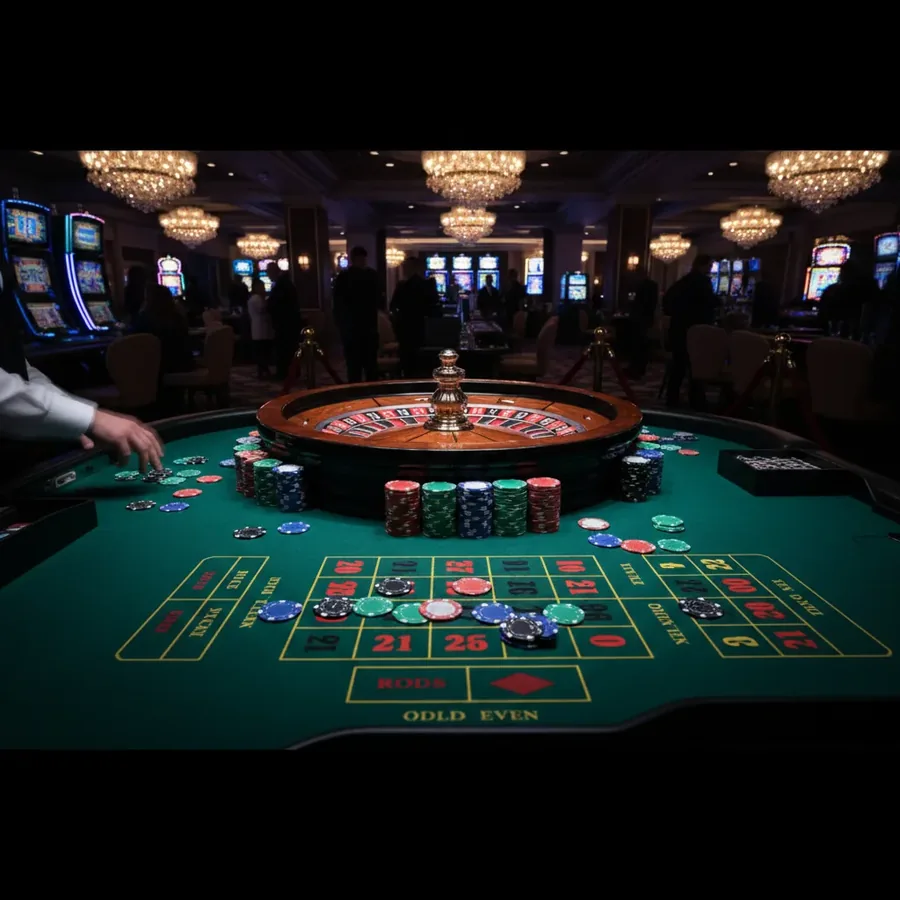
How Payout Odds 35:1 Are Achieved
A Straight bet on any single number pays out at exactly 35:1 across all European and French roulette variants reviewed in this analysis, maintaining consistency despite differences in house edge calculations. This specific multiplier is applied uniformly whether the player engages with Authentic Gaming’s Blaze Roulette or Evolution’s Lightning Roulette, ensuring that the base reward structure remains identical for core wagers. The constant ratio ensures that the casino retains its mathematical advantage without altering the fundamental payout mechanics for the most direct type of bet available on the felt. Players must recognize that this standard rate applies equally to high-stakes tables where limits reach up to 5,000 EUR per spin.
How Long a Session May Last
Live dealer tables such as Blaze Roulette operate on a strict schedule defined by the host availability window, which spans from 19:00 until 01:00 CEST, limiting continuous play to six hours per day. This temporal boundary means that any strategy relying on long-term variance reduction must be compressed into this specific timeframe, affecting how many rounds can realistically be completed in one visit. Gamblers planning extended sessions must account for these operational hours when calculating their total bankroll requirements and expected turnover against the wagering conditions attached to bonuses. The fixed duration also impacts the statistical validity of short-term results observed during limited playing windows.
Straight 35:1 vs Dozen 2:1 Hit Rate
The Straight bet offers a payout of 35:1 but hits only once every 37 spins on average, whereas the Dozen bet pays 2:1 and wins approximately twice as frequently due to covering three numbers. This difference in hit rate creates distinct risk profiles, with the higher payout requiring significantly more patience and a larger bankroll to sustain through the inevitable losing streaks associated with low-probability outcomes. Analyzing these ratios reveals that while the Straight bet yields greater individual rewards, the Dozen bet provides more frequent feedback loops that help manage volatility over a longer period of play. Both bets contribute differently to the overall experience depending on whether the player prioritizes frequency or magnitude of returns.
100 Euro Bankroll: 100 Rounds Simple Chances
Starting with a 100 Euro bankroll and betting on simple chances like Red/Black at 1:1 allows for roughly 100 rounds before the funds are likely exhausted, assuming an average loss per spin due to the house edge. Each spin carries a 2.70% disadvantage for the player on European wheels, meaning that over 100 attempts, the expected loss accumulates steadily, reducing the initial capital by approximately 2.70 Euros on average. This scenario highlights the importance of bankroll management, as even small edges compound over time to erode the starting amount significantly if no profit-taking strategy is employed. The 10% contribution of table games toward bonus wagering further complicates this calculation by slowing down the clearance process relative to other game types.
Roulette bet types at a glance
| Bet | Payout | Win Chance | Numbers Covered | House Edge |
|---|---|---|---|---|
| Roulette Französisch, innere Einsätze (La Partage gilt nicht) | Straight 35:1, Split 17:1, Street 11:1, Corner 8:1, Six Line 5:1, Dozen 2:1, Column 2:1 | 97.30% | Rad gleich (37 Sektoren), aber La Partage/En Prison gilt nicht für innere Einsätze – Edge bleibt europäisch | 2.70% |
| Roulette Amerikanisch – Five Number Bet (0, 00, 1, 2, 3) | Five Number 6:1 (deckt 5 von 38 Sektoren) | 92.11% | Einzige Wette am amerikanischen Rad mit Edge über 5,26% – „Fallenwette“. Kein Äquivalent am europäischen Rad | 7.89% |
| Roulette Französisch mit La Partage (gerade Chancen) | Rot/Schwarz 1:1 (bei 0 Rückerstattung 50%), Odd/Even 1:1, Low/High 1:1; Innere Einsätze ohne La Partage: Straight 35:1, Split 17:1, Street 11:1, Corner 8:1 | 98.65% | Bei 0 wird die Hälfte des Einsatzes auf gerade Chancen zurückerstattet (Rot/Schwarz, Pair/Impair, Manque/Passe). En Prison gibt denselben 1,35%. Regel gilt NUR für gleiche Einsätze | 1.35% |
| Roulette Amerikanisch (doppelte Null, 38 Sektoren) | Straight 35:1, Split 17:1, Street 11:1, Corner 8:1, Six Line 5:1, Dozen 2:1, Column 2:1, Rot/Schwarz 1:1 | 94.74% | 38 Sektoren (1–36 + 0 + 00); Auszahlungen wie beim europäischen Rad, aber der zusätzliche Sektor verdoppelt den Hausvorteil | 5.26% |
| Roulette Europäisch (einfache Null, 37 Sektoren) | Straight 35:1, Split 17:1, Street 11:1, Corner 8:1, Six Line 5:1, Dozen 2:1, Column 2:1, Rot/Schwarz 1:1, Odd/Even 1:1, 1-18/19-36 1:1 | 97.30% | 37 Sektoren (1–36 + 0); Auszahlungen wie für 36 Sektoren – daher konstanter Edge auf ALLE Wetten | 2.70% |
Only 10 Percent Contribution: What are the Consequences?
The contribution of table games toward the wagering requirement stands at a mere 10 percent, which significantly extends the time needed to clear bonus funds. For instance, depositing 100 euros and receiving a 300 percent match results in a 400 euro balance that requires substantial turnover before withdrawal is permitted. This low percentage forces players to engage in high-volume betting on games like roulette, which inherently carry higher house edges compared to slots.
Calculating the necessary turnover reveals the financial impact of this rule, as a 400 euro bonus with standard x40 wagering demands 16,000 euros in total bets. At a 10 percent contribution rate, only 1,600 euros of actual wagers count toward the 16,000 euro target, effectively multiplying the required playthrough volume by ten. Players must therefore place many more spins or hands than they would if table games contributed fully, increasing exposure to the casino's mathematical advantage.
Why 5.26 Percent is Rarely Recommended
The American Roulette variant features a double zero sector, resulting in a house edge of 5.26 percent, which is nearly double that of European wheels. This specific edge arises because the wheel contains 38 sectors instead of 37, yet payouts remain fixed at standard ratios like 35 to 1 for straight bets. Consequently, the presence of the extra zero segment systematically reduces the player's theoretical return over extended play sessions compared to other variants.
How Long is a Betting Phase at a Live Table?
Live dealer tables operate within specific host schedules, such as Blaze Roulette by Authentic Gaming, which features hosts available from 19:00 to 01:00 CEST. During these sessions, betting phases are typically short to maintain game flow, often lasting around 20 to 30 seconds per round depending on the provider. This rapid pace allows for higher hourly action, but it also means decisions must be made quickly, impacting strategy execution for complex bet types.
Corner 8:1 Covers Four Numbers
A corner bet pays out at odds of 8 to 1 and covers four adjacent numbers on the roulette layout, offering a balanced risk-reward profile. This wager type is common across various live tables, including Quantum Roulette Live by Playtech, where multipliers can enhance the base payout significantly. Understanding this specific payout structure helps players manage their bankroll more effectively when placing inside bets during high-variance rounds.
What Doesn't Count as Loss Protection with Zéro?
La Partage rules, which refund half of even-money bets when the ball lands on zero, do not apply to inner bets in French Roulette variants. While outer bets like red or black benefit from this protection, reducing the house edge to 1.35 percent, inner wagers such as splits or streets retain the full 2.70 percent edge. This distinction is crucial for players who might assume all bets receive similar safeguards against the single zero outcome.
La Partage: What 50 Percent Return Means
The French Roulette variant with La Partage offers a specific refund mechanism for even-money bets, reducing the house edge to 1.35% compared to the standard 2.70% on other European tables. This rule applies exclusively to outside wagers like Red/Black or Odd/Even when the ball lands on zero, returning half the stake rather than forfeiting it entirely. Consequently, players retain more capital over extended sessions, effectively doubling their expected return on these specific outcomes against the standard table.
In contrast, inner bets such as Straight (35:1), Split (17:1), and Street (11:1) do not benefit from this protection, maintaining the full 2.70% house advantage regardless of the zero outcome. The distinction is critical because a player betting across both categories faces two different mathematical realities within the same game session. This split structure means variance remains high for chip placements inside the grid while staying low for perimeter chips.
The En Prison rule provides an alternative path for the same 1.35% edge by freezing the bet for the next spin instead of immediate refund, though both mechanisms yield identical long-term results. Unlike the American Double Zero version which lacks any such mercy, this French-specific feature significantly alters the risk profile for conservative bankroll management strategies. Players relying on low-variance tactics must verify that the table explicitly supports La Partage to avoid paying the higher standard rate.
Statistics: 2.70 Percent of Every Bet
The standard European Roulette wheel contains 37 numbered pockets ranging from one to thirty-six plus a single zero, creating a fixed 2.70% house edge on all wager types. This percentage represents the theoretical retention rate per euro staked, calculated by dividing the single zero pocket by the total number of sectors in the layout. Such a figure places this variant between the lower-edge French games and the significantly higher-risk American alternatives found in many digital libraries.
When comparing this to the American Roulette variant with its 38 pockets including a double zero, the house edge jumps to 5.26%, nearly doubling the cost of play for the casino visitor. The payout structure remains identical at 35:1 for straight bets, but the additional losing sector drastically reduces the probability of winning any single number outcome. This mathematical disparity explains why savvy analysts recommend avoiding the American wheel unless specific promotional bonuses offset the inherent disadvantage.
The Five Number Bet on the American wheel covers pockets zero, double zero, one, two, and three, yet it carries a punitive 7.89% house edge, making it the worst value proposition available. This specific wager offers no equivalent on the European or French wheels, serving as a unique trap for inexperienced players unfamiliar with the odds. Understanding these statistical baselines allows for better bankroll allocation when selecting which table variants to engage during a gaming session.
Lightning Roulette vs Classic Wheel: RTP Difference
Both Evolution's Lightning Roulette and the classic European table share an identical base RTP of 97.30%, derived from the standard 37-pocket wheel and uniform payout ratios for regular bets. The primary divergence lies in the addition of multipliers ranging from 50x to 500x applied to one to five randomly selected numbers before each spin begins. These random enhancements increase volatility without altering the fundamental mathematical expectation of the underlying wheel mechanics.
Authentic Gaming's Blaze Roulette operates on the same 37-sector principle with a 97.30% RTP but omits the lightning multiplier feature, offering a more traditional live dealer experience. Stakes for both titles range from 0.20 EUR up to 5,000 EUR, allowing high rollers to utilize the bonus features while casual players stick to base wagers. The absence of multipliers in Blaze results in lower variance compared to the explosive potential seen in the Evolution title.
Playtech's Quantum Roulette Live also maintains the 97.30% base RTP while introducing quantum multipliers up to 500x on one to five numbers, mirroring the high-volatility approach of its competitors. All three live tables pay out straight bets at 35:1 and column/dozen bets at 2:1, ensuring consistency in core mechanics despite the visual differences. Players seeking consistent returns should prefer Blaze, whereas those chasing large payouts from small stakes may find the multiplier versions more appealing.
Even Chances vs Straight: Variance Comparison
Betting on even chances such as Red/Black or Odd/Even yields a 1:1 payout with a 48.65% win probability on the French wheel due to the La Partage rule, resulting in low variance gameplay. A straight bet covering a single number pays 35:1 but has only a 2.70% hit frequency on the 37-pocket wheel, creating high volatility and larger swings in bankroll size. This fundamental difference dictates whether a player aims for longevity or seeks occasional large wins from small initial deposits.
The maximum win cap for straight bets on live tables like Blaze Roulette is capped at 35 times the stake, limiting the absolute payout regardless of the multiplier features present in other variants. In contrast, Lightning Roulette can award up to 500x the original stake on a single number if the lightning multiplier hits, drastically increasing the potential return on a minimal 0.20 EUR wager. This structural variation requires players to adjust their betting units accordingly to manage the increased risk associated with high-payout options.
Wagering contributions differ slightly across platforms, with table games typically counting 10% toward bonus turnover requirements, making high-volume low-stakes betting on even chances more efficient for clearing promotions. A player depositing €2,000 with a 300% match receives €6,000 in bonus funds, requiring €240,000 in total turnover to unlock withdrawals. Focusing on low-variance bets accelerates this process by allowing more spins per euro wagered compared to the slower progression of high-risk straight bets.
37 Pockets vs. 38 Pockets: The Difference
The European wheel features 37 pockets consisting of numbers one through thirty-six plus a single zero, establishing a baseline house edge of 2.70% for all internal and external wagers. This configuration is mathematically superior to the American wheel, which adds a double zero pocket to create 38 total sectors and doubles the casino advantage to 5.26%. The extra pocket does not change the payout odds but significantly increases the frequency of losing outcomes for every bet placed.
American Roulette retains the same payout structure as its European counterpart, offering 35:1 for straight bets and 2:1 for dozens or columns, yet the presence of the double zero erodes player equity faster. The Five Number Bet, covering zero, double zero, one, two, and three, pays 6:1 but carries a 7.89% house edge, making it statistically inferior to any other wager on the table. This specific bet has no analogue on the 37-pocket wheel, highlighting the unique traps designed into the American layout.
Live dealer implementations like Blaze Roulette adhere strictly to the 37-pocket European standard, ensuring players are never exposed to the inflated 5.26% edge inherent in American rules. The minimum stake of 0.20 EUR allows for extended play on the lower-edge table, maximizing the utility of any welcome bonus funds received. Choosing the correct wheel variant is the first step in minimizing the theoretical loss rate before considering specific game modifiers or multipliers.
Contact
Live - online chat
Banking




Providers






Locowin Casino 2026